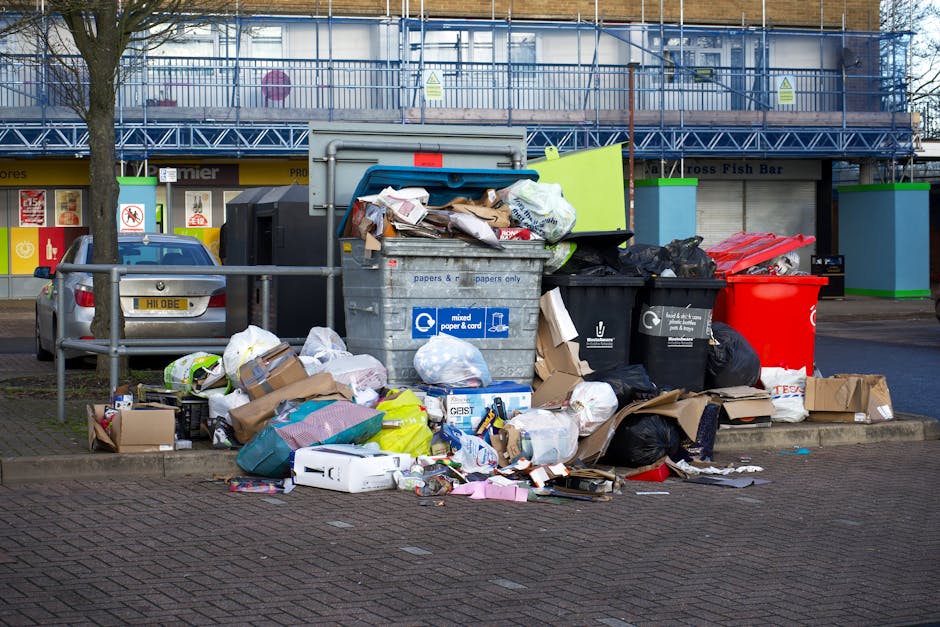
Avoid Hidden Charges in Northolt Rubbish Removal Quotes
If you have ever stared at a rubbish removal quote and thought, "Hang on, where did that extra fee come from?", you are not alone. Hidden charges are one of the most frustrating parts of hiring waste clearance help in Northolt. The good news is that most surprise costs can be spotted before you book, if you know what to look for and ask the right questions.
This guide shows you how to avoid hidden charges in Northolt rubbish removal quotes without making the process more complicated than it needs to be. We will break down common pricing traps, explain how decent providers structure quotes, and give you a simple method for comparing offers properly. If you are sorting out a home clear-out, garden waste, builders' debris or a larger commercial job, this is the practical stuff that saves money and stress.
Why Avoid Hidden Charges in Northolt Rubbish Removal Quotes Matters
Let's face it: rubbish removal is rarely the exciting part of a project. But a quote that looks cheap at first glance can turn into an expensive headache if it excludes access fees, labour, disposal surcharges, or items the provider decides are "special waste" once they arrive. That kind of pricing is especially awkward when you are already juggling a move, a renovation, or a clear-out before the weekend.
In Northolt, where homes, terraces, flats and small business units often have different access conditions, the details matter. A van that can park outside one property may need extra effort at another. A quote that ignores those realities is not really a quote. It is a guess dressed up as one.
Hidden costs matter for three simple reasons:
- Budget control: you need to know the full cost before work begins.
- Fair comparison: a low headline price is useless if the final bill is much higher.
- Less friction on the day: no one enjoys a doorstep discussion about "unexpected" charges when the lorry is already there.
There is also a trust angle. A clear, honest quote says a lot about how the company works. If pricing is vague, the service can be vague too. That is not always the case, of course, but it is a pattern worth noticing.
How Avoid Hidden Charges in Northolt Rubbish Removal Quotes Works
At its core, avoiding hidden charges is about separating the headline price from the true all-in cost. Good quotes explain what is included, what can change the price, and what happens if the job differs from the description.
For most rubbish removal jobs, the final price is shaped by a few practical factors:
- Volume: how much waste there actually is, usually measured by load size, weight, or time on site.
- Type of waste: general household rubbish is different from plasterboard, soil, fridges, sofas, or hazardous materials.
- Access: stairs, narrow lanes, parking restrictions, long carry distances, and lift use can all affect labour time.
- Location and permits: some jobs may require additional planning if a vehicle cannot park nearby.
- Timing: same-day or out-of-hours work may cost more than a standard booking.
That is why two quotes for what sounds like the "same" job can differ. One provider may include disposal, labour, and loading. Another may only include the vehicle and then add extras for the rest. Truth be told, the devil is usually in the definition of the job, not in the moving of the rubbish itself.
If you want a useful benchmark for what should be discussed, look at the company's own pricing and quotes information alongside its service pages such as rubbish removal and man and van. Those pages should help you understand how the service is framed before you commit.
Key Benefits and Practical Advantages
Avoiding hidden charges is not just about saving money, although that is obviously a big part of it. It also makes the whole process calmer and more predictable. Once you know what the job will cost, you can decide whether rubbish removal, a skip, or a hybrid service is the best fit.
Here are the main advantages:
- Cleaner budgeting: no scrambling to find extra funds on the day.
- Better service selection: you can compare rubbish removal against skip hire, wait and load skip hire, or grab hire services with confidence.
- Less disruption: the job is more likely to go smoothly when everyone agrees on the scope beforehand.
- Fewer disputes: clear pricing reduces those awkward "that was not included" conversations.
- Better planning: if a permit, extra labour or specialist disposal is needed, you can arrange it early.
There is a subtle but important point here. A cheaper-looking quote can actually be more expensive if it leads to delays or a second visit. Sometimes paying for a fully explained service is the sensible choice, even if it stings a little at first. You know that feeling when a cheap option somehow eats the afternoon? Exactly.
Who This Is For and When It Makes Sense
This approach is useful for almost anyone arranging waste clearance in Northolt, but it matters most when the job is not straightforward. If the waste is easy to see, easy to load, and easy to access, pricing is usually simpler. Once the job gets a bit messy, quote wording becomes much more important.
It makes particular sense for:
- Homeowners and tenants clearing lofts, garages, sheds or full rooms.
- Landlords and agents dealing with post-tenancy waste or abandoned items.
- Tradespeople needing reliable pricing for builders' waste or renovation debris.
- Office managers arranging office clearance or confidential waste handling.
- Property managers booking one-off or repeated collection jobs.
- Anyone with specialist items such as appliances, mattresses, sofas, or mixed loads.
It is also especially important if you are comparing a fast collection against more structured services such as same day skip hire, domestic skip hire, or builders skip hire. Different services suit different jobs, and the cheapest one on paper is not always the right one in practice.
Step-by-Step Guidance
If you want a simple way to avoid hidden charges, use this process every time. It takes a few extra minutes, but it can save a fair bit of money.
- Describe the waste clearly.
List the items, rough volume, and whether anything is heavy, awkward, or potentially restricted. A sofa, a broken wardrobe, and a pile of mixed bagged waste are not the same job. - Explain access honestly.
Tell the provider about stairs, basements, tight roads, parking restrictions, locked gates, or long carry distances. If the team has to walk rubbish a long way, that affects labour. - Ask what the quote includes.
Check whether labour, loading, disposal, VAT, fuel, waiting time, congestion-related delays, and return visits are included. If the answer is fuzzy, that is a clue. - Ask what counts as extra.
Some firms charge more for mattresses, fridges, plasterboard, soil, or waste that must be sorted separately. That is not automatically unfair, but you need to know it in advance. - Compare like for like.
Do not compare a basic collection fee with an all-in service fee. Compare the same scope, same timings, same access assumptions. - Get the quote in writing.
Even a short written summary is better than a phone estimate you cannot refer back to later. A text or email can prevent confusion. - Confirm the final check on arrival.
Ask how any variation will be handled if the load turns out larger than expected. A reputable company will explain before starting, not after.
One practical tip: take two or three photos of the waste and access point. It is not glamorous, but it helps the provider quote more accurately. In our experience, a good photo can do more than ten minutes of vague explaining.
Expert Tips for Better Results
Here is where the small savings tend to hide. These are the details people often miss, especially when they are trying to get the job sorted quickly.
- Ask for the disposal basis: is the price based on weight, volume, labour time, or a fixed mixed-load package?
- Check for minimum charges: some smaller jobs still carry a minimum collection fee. That is normal, but it should be stated clearly.
- Watch for "subject to inspection" wording: that can be fine, but it should not be used to leave the price open-ended without reason.
- Clarify bulky items early: items like mattresses, sofas and appliances can change the cost structure. See pages such as mattress and sofa disposal and fridge and appliance removal if your load includes them.
- Ask about sorting requirements: mixed waste may need to be separated for recycling, which can affect labour and disposal.
- Keep an eye on timing: if you need a late booking, same-day collection, or a very tight slot, make sure the quote reflects that.
Another useful habit is to ask, "If the job changes slightly, what happens to the price?" That one question cuts through a lot of vagueness. It also lets you see how the company handles real-world problems, which is a pretty good test of professionalism.
If you are dealing with building work, the service may need to be framed around construction waste disposal or builders waste removal rather than general rubbish removal. That distinction matters because the waste stream affects sorting, transport, and disposal cost.
Common Mistakes to Avoid
Most hidden-charge problems come from a few very ordinary mistakes. Nothing dramatic. Just small assumptions that snowball.
- Accepting a quote without a scope: "roughly that much waste" is not enough if the load is mixed or awkward.
- Ignoring access details: if the team has to carry waste from the back of a building or across a busy road, the original estimate may no longer hold.
- Not asking about restricted items: hazardous or specialist waste can change the job entirely. For those situations, hazardous waste disposal should be treated as a separate conversation.
- Comparing apples with pears: a skip price, a wait-and-load service, and a man-and-van collection solve different problems.
- Leaving out permits: if the vehicle or skip cannot sit fully on private land, you may need to think about skip permits or similar access arrangements.
- Assuming "all rubbish" means all rubbish: it rarely does. Always ask what is excluded.
One tiny but important point: avoid trying to "game" the quote by leaving things out and hoping for the best. It sounds harmless, but it usually backfires. The collection team can only price what they know. And if the surprise comes at the kerbside, nobody is happy.
Tools, Resources and Recommendations
You do not need specialist software to protect yourself from hidden charges. A simple, methodical approach does most of the work.
Useful tools and resources include:
- Photos or a short video: capture the waste pile, access route, and any obstacles.
- A checklist of items: write down exactly what is going, especially if there are appliances or mixed materials.
- Basic measurements: if possible, estimate the length, width and height of the pile.
- Written quote record: save emails or messages so you can refer back to the agreed scope.
- Service comparison: review relevant pages such as skip sizes and prices, what can go in a skip, and recycling and sustainability if you are weighing up disposal options.
If your job needs a more specialist setup, you may want to compare wait and load skip hire with grab lorry hire. Those methods can be useful when access is tight or when you do not want a skip sitting outside for days. Each has its own pricing logic, so again, compare the full picture rather than the headline rate.
Law, Compliance, Standards, or Best Practice
When money and waste are involved, a careful approach is not just smart; it is responsible. In the UK, waste handling should follow proper legal and environmental practice, and reputable operators will usually be clear about how they manage disposal, sorting, and transport. You do not need to become an expert in waste law to protect yourself, but you should expect honest answers.
A few best-practice points are worth keeping in mind:
- Duty of care: waste should be transferred to authorised handlers and managed properly.
- Waste type matters: mixed, bulky, recyclable and hazardous materials may need different handling.
- Safety matters: teams should work in a way that avoids damage, injury and unnecessary risk.
- Security matters: if you are disposing of confidential material, services such as confidential shredding are more appropriate than general waste collection.
It is also sensible to check a provider's wider policies, not because you need to read every line, but because they show how the business operates. Pages like terms and conditions, payment and security, insurance and safety, and health and safety policy help set expectations. A company that explains its process clearly is usually a safer bet than one that hides behind vague promises.
For larger commercial or site-based jobs, the same principle applies, just with more moving parts. A transparent quote for site clearance or construction waste clearance should explain labour, access, and material type without making you decode a spreadsheet from another planet.
Options, Methods, or Comparison Table
Choosing the right service is one of the best ways to avoid hidden charges. A mismatch between the job and the service often creates the surprise bill. Here is a practical comparison.
| Service type | Best for | Pricing usually depends on | Common hidden-charge risk |
|---|---|---|---|
| Rubbish removal | General clear-outs, mixed household waste, bulky items | Volume, labour, item type, access | Extras for awkward access or restricted items |
| Skip hire | Projects where waste can be loaded gradually | Skip size, hire period, permit needs, waste type | Permit fees, prohibited items, overfilling |
| Wait and load | Quick clearances where a skip cannot stay on site | Time on site, labour, waste type | Waiting charges if the load takes longer than expected |
| Grab hire | Heavy, bulky or loose waste, especially where access is decent for a grab vehicle | Load size, material type, access, collection style | Extra handling for mixed or difficult waste |
| Man and van | Smaller clearances, flexible collection jobs | Labour time, volume, collection conditions | Assumptions about bagging, carrying, or loading time |
The right choice depends on the job, not the label. For a flat clear-out, house clearance or a man-and-van-style collection may be more efficient. For a messy renovation, a skip or builders' service may be better. For garden cuttings, you may be better off with garden waste removal. Simple enough, really.
Case Study or Real-World Example
Picture a typical Northolt Saturday morning. A homeowner has cleared a garage, dragged out old shelves, broken storage boxes, a worn-out mattress and a couple of appliances. The garage looks better already, but the pile has grown into one of those awkward little mountains that somehow take up half the driveway.
They ring around for quotes. One provider gives a fast price based on "a light load." Another asks for photos and checks whether the fridge is still intact, whether the mattress is contaminated, and whether the van can park directly outside. The second quote comes out a little higher, but it also spells out labour, disposal, and the special handling of the appliance and mattress.
On the day, that extra clarity matters. The team arrives, confirms the load, and gets on with it. No arguing. No surprise uplift charge. No last-minute "we forgot to mention" moment when the kettle is already boiling in the background. The final bill matches the quote, and the customer can get on with the rest of the day.
That is the real win here. Not the lowest number on a page, but the quote that survives contact with reality.
Practical Checklist
Use this before you accept any rubbish removal quote in Northolt.
- Have I described the waste clearly, including item types?
- Have I explained access problems, stairs, distance, or parking issues?
- Do I know whether labour and disposal are included?
- Have I asked about extra charges for appliances, mattresses, plasterboard, soil, or hazardous items?
- Is the quote written down somewhere I can revisit later?
- Have I compared the quote against another service type if relevant?
- Do I understand whether the job is fixed price, estimated, or subject to inspection?
- Have I checked whether a permit or different access plan is needed?
- Have I reviewed the provider's terms, payment, and safety information?
- Am I comfortable that the quote reflects the actual job, not just the easiest version of it?
If you can tick most of those boxes, you are already ahead of the game. A little caution goes a long way here.
Get a free quote today and see how much you can save.
Conclusion
The easiest way to avoid hidden charges in Northolt rubbish removal quotes is to slow the process down just enough to ask better questions. You do not need to overcomplicate it. You just need a clear description of the waste, honest details about access, and a written quote that explains what is and is not included.
Once you start comparing services properly, the picture becomes much clearer. Sometimes rubbish removal is the right call. Sometimes a skip or grab hire makes more sense. Sometimes a specialist service is the safest option. The key is to know that before anyone turns up at your property and starts adjusting the price in real time.
And if you are still unsure, that is fine too. A good provider should be willing to explain the quote in plain English. That alone tells you a lot. After all, a fair price should feel clear, not clever.
In the end, the best quote is the one you can trust on a busy day, when the van is outside, the tea is going cold, and you just want the job done properly.
Frequently Asked Questions
What are hidden charges in rubbish removal quotes?
Hidden charges are extra costs that are not made clear when you first receive a price. They can include labour additions, access fees, item-specific charges, waiting time, disposal surcharges, or fees for restricted waste.
How can I tell if a Northolt rubbish removal quote is fair?
A fair quote should explain what is included, what could change the price, and whether it is fixed or estimated. It should also match the actual amount and type of waste you need removed.
Should I choose the cheapest quote I get?
Not necessarily. The cheapest quote can look attractive, but if it excludes disposal, labour, or access issues, it may end up costing more. Compare the full scope, not just the headline number.
Why do quotes change after the provider sees the waste?
Quotes often change when the real job differs from the description. For example, the load may be bigger, heavier, or harder to access than expected. Photos and honest detail help reduce that risk.
Are mattresses, sofas and appliances usually extra?
They often are, because they can require separate handling or disposal. It is sensible to ask about items like these before booking, especially if your load contains a mix of general rubbish and bulky waste.
Do I need to mention access problems when asking for a quote?
Yes. Stairs, long carry distances, limited parking, locked gates, and narrow roads can all affect labour and time on site. Leaving that out is one of the most common reasons quotes become inaccurate.
Is a fixed quote better than an estimate?
A fixed quote gives more certainty, but only if the job details are accurate. An estimate can still be useful for early planning, though you should ask what could cause the final price to change.
What should I ask before booking rubbish removal in Northolt?
Ask what is included, what counts as extra, whether the quote covers disposal and labour, how access affects pricing, and whether any special items need separate treatment. Those five questions usually reveal most hidden-cost risks.
Can I compare rubbish removal with skip hire?
Yes, and it is often wise to do so. For some jobs, skip hire or wait and load skip hire may be better value. For others, direct collection is more convenient. It depends on space, time and how the waste will be loaded.
What if I have hazardous or unusual waste?
Do not assume it can go with general rubbish. Hazardous or specialist items should be discussed separately, and you may need a dedicated service such as hazardous waste disposal.
Should the quote be in writing?
Yes, ideally. A written quote or message helps avoid misunderstandings later. Even a short email summary is better than relying on memory or a quick phone estimate.
What if the provider says the price is "subject to inspection"?
That is not always a problem, but it should come with a clear explanation of what the inspection might change. If the wording is vague, ask for more detail before agreeing.
How can I avoid being charged for a second visit?
Be specific about volume, access and item types, and ask whether the quote includes the full collection on one visit. If there is any doubt, say so early. A small bit of honesty upfront is usually cheaper than a second truck rolling in later.